

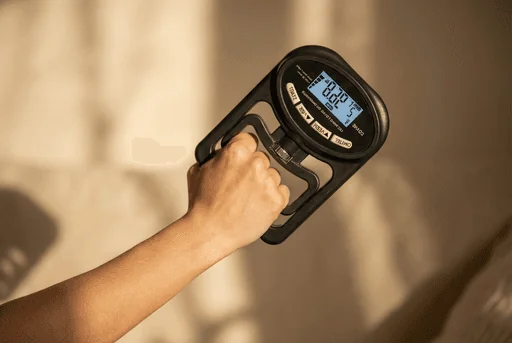
When you think about markers of good health, things like blood pressure, cholesterol, or BMI might come to mind. But one simple, often-overlooked measurement with grip strength measured with a handheld dynamometer, is emerging as one extremely powerful indicator of your overall health and longevity.
What grip strength can reflect in an annual checkup:
1. Functional Capacity in Daily Life
In population studies, lower measured grip strength is often associated with lower functional capacity and challenges with daily activities. As part of an annual checkup, clinicians can use this measure as a quick input to decide whether a more complete functional evaluation would be helpful. It is not a stand-alone predictor.
2. A Marker of Muscle and Bone Health
Grip strength also reflects the health and density of your bones. Research using U.S. population data found that individuals with higher grip strength had significantly greater bone mineral density (BMD), a key measure in assessing osteoporosis risk.
This connection exists because muscles and bones communicate through mechanical loading: when muscles contract, they stimulate bone growth and remodeling. When muscle strength declines, bone mass tends to follow. Grip strength reflects the overall health of your muscles and bones.
3. A Mirror of Metabolic and Cardiovascular Health
Grip strength also provides insight into how well your metabolism and heart are functioning.
Across cohorts, lower grip strength is associated with less favorable metabolic profiles and higher observed rates of cardiovascular conditions. These are correlations, not proof of cause and effect. Individual risk is assessed by a clinician using labs, biomarkers, imaging when indicated, and exam findings from the comprehensive visit.
4. A Predictor of Overall Longevity and Healthspan
Large population studies consistently show that lower grip strength is associated with a higher all-cause mortality, even after controlling for other health factors.
A major UK Biobank study of over 500,000 participants found that people with weaker grip strength had a significantly higher risk of premature death and chronic disease. Meta-analyses confirm that declines in grip strength reliably correspond to increases in mortality risk.
The pattern is clear: stronger grip strength aligns with longer, healthier lives.
How to Improve Your Grip (and Your Health)
Plans are personalized with a clinician or qualified professional. Examples include:
• Progressive full-body resistance training using body weight, machines, or free weights
• Whole-body strength work that supports balance and coordination
• Attention to nutrition, recovery, and sleep as part of an overall plan
These ideas are educational and do not replace medical advice. Individuals with pain, recent injury, or ongoing conditions should speak with a clinician before starting new exercises.
How we use it at TejoMed
At TejoMed, your annual comprehensive checkup includes grip strength measured with a calibrated hand dynamometer, reviewed alongside your history, exam, and lab biomarkers. Measurements are explained in context, and any next steps are discussed with your doctor.
Interested in learning more?
You can schedule a conversation with our team to explore whether this type of comprehensive annual review fits your goals.
References
Lee, S. H., Gong, H. S. (2020). Measurement and interpretation of handgrip strength for research on sarcopenia and osteoporosis. Journal of Bone Metabolism. (https://pmc.ncbi.nlm.nih.gov/articles/PMC7297622/)
Neri, S. G. R., Oliveira, J. S., Dario, A. B., et al. (2021). Poor handgrip strength determined clinically is associated with falls in older women. J Frailty Sarcopenia Falls. (https://pmc.ncbi.nlm.nih.gov/articles/PMC8173535/)
Luo, Y., Jiang, K., & He, M. (2020). Association between grip strength and bone mineral density in general U.S. population of NHANES 2013–2014. Archives of Osteoporosis.
(https://pubmed.ncbi.nlm.nih.gov/32173776/)
Zhang, F., Li, Z., Wang, F., et al. (2024). Association of handgrip strength and risk of cardiovascular disease: a population-based cohort study. Aging Clinical and Experimental Research. (https://pmc.ncbi.nlm.nih.gov/articles/PMC11480190/)
Celis-Morales, C. A., Lyall, D. M., Anderson, J., et al. (2018). Associations of grip strength with cardiovascular, respiratory, and cancer outcomes and all cause mortality: prospective cohort study of half a million UK Biobank participants. BMJ. (https://www.bmj.com/content/361/bmj.k1651)
Published by TejoMed Editorial Team
TejoMed Editorial Team
TejoMed’s editorial team publishes service, practice and health education content. This profile is not a clinician attribution and does not represent medical authorship or review.
More blogs like this
CONTINUOUS CARE
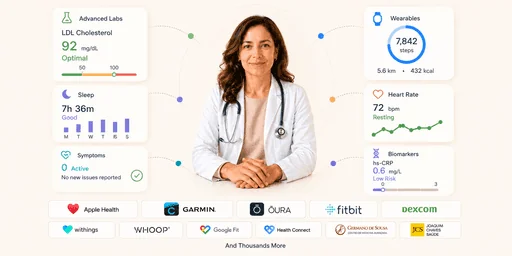
TejoMed Compass: your health and data, in one place, in your doctor's hands
TejoMed

Executive Health
What leaders need from their doctors, a high-performance healthcare lens
TejoMed
5 mins long

Preventive Health
Physical inactivity: why it is a major, modifiable health risk today
TejoMed
5 mins long

Mind & Lifestyle Health
Everything You Need To Know About The Mind-Body Connection
TejoMed
4 mins long

Generic
TejoMed anuncia parceria com rede 1/4
TejoMed
3 mins long
Healthcare
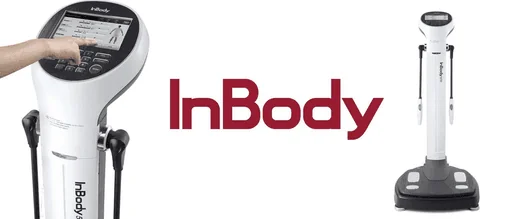
Your Body’s Blueprint: The Power of InBody Assessments
TejoMed
3 mins long

Healthcare
Microbiome: How Your Gut Health Impacts Whole-Body Wellness
TejoMed
5 mins long

Healthcare
How Social Connection Fuels Mental Health & Longevity
TejoMed
5 mins long